A pearl is the only gemstone grown by a living creature rather than mined from the earth. Pearls from oyster formation begin the moment a tiny irritant slips inside a bivalve mollusk, triggering a natural defense response that slowly wraps the intruder in shimmering nacre. Gemologists have studied this process for over a century, and jewelers still rely on it to source nearly every strand sold today. In this guide, you’ll learn exactly how pearl oysters build a gem layer by layer, what separates natural pearls from cultured pearls, which oyster species produce which pearl types, and how to protect your pearl jewelry for decades of wear.
What Is a Pearl, and Why Do Oysters Make Them?
A pearl is not a mineral like a diamond or sapphire — it’s an organic gem, and understanding pearls from oyster biology starts with recognizing it’s built entirely by a living marine mollusk. Pearl oysters, part of the Pinctada genus, are saltwater bivalves protected by a hinged shell and soft internal mantle tissue. When a foreign body such as a parasite, sand grain, or shell fragment slips inside, the oyster has no way to expel it.
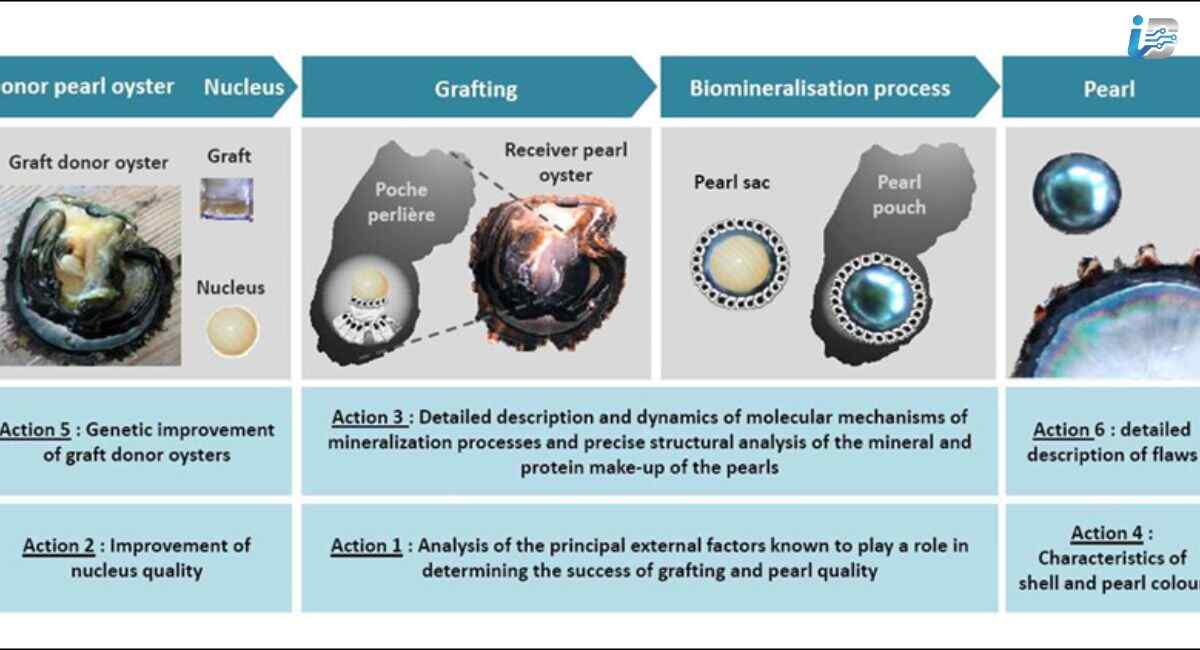
Instead, specialized mantle cells treat the intruder as a threat and respond with a biomineralization process. The oyster secretes calcium carbonate bound by a protein called conchiolin, isolating the irritant in smooth material instead of letting it damage sensitive tissue. This defensive wrapping becomes the pearl sac, and the finished pearl that eventually forms inside is, quite literally, a byproduct of survival rather than design.
How Oysters Create a Pearl, Step by Step
The path from a single irritant to a lustrous pearl follows a remarkably consistent biological sequence, whether it unfolds naturally in the wild or through pearl cultivation. A foreign object, or a surgically implanted bead nucleus in cultured pearl farming, lodges near the mantle edge, and the oyster’s tissue begins forming a protective sac around it almost immediately.
From there, the mantle deposits microscopic aragonite crystals in overlapping sheets, gradually building the nacre coating that gives every pearl its glow. Each sheet is thinner than a human hair, but thousands accumulate over months or years, and the alternating crystal orientation is what produces a pearl’s signature iridescence and mirror-like surface luster.
Natural Pearls vs Cultured Pearls: What’s the Real Difference?
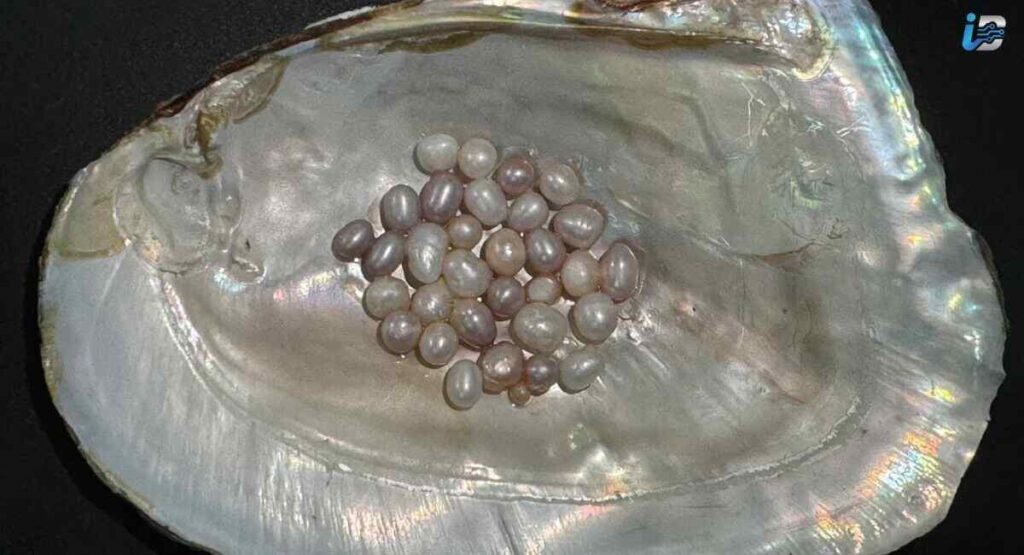
Buyers frequently assume natural oyster pearl inside and cultured pearls are different substances, but they’re chemically identical — both are pure nacre produced by the same oyster species through the same defense mechanism. The only real distinction is how the original irritant got inside the shell in the first place.
A true natural pearl forms entirely by chance, with no human involvement in the process, which is why fewer than 1 in 10,000 wild oysters ever produces a gem-quality pearl. Cultured pearls, pioneered commercially by Kokichi Mikimoto in the 1890s and now certified through labs like the Gemological Institute of America (GIA), involve a technician implanting a small nucleus and donor mantle tissue — after which the oyster does exactly what nature intended.
Types of Pearl Oysters and the Pearls They Produce
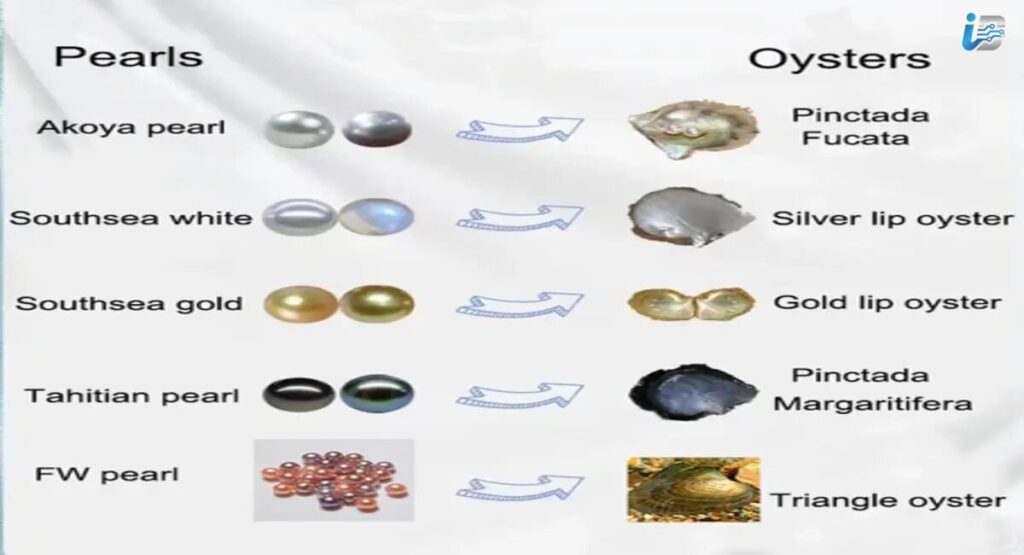
Not every pearl oyster is the same species, and understanding the differences between pearls from oyster varieties directly shapes a pearl’s size, color, and market value. Akoya oysters (Pinctada fucata), farmed extensively across Japan and China, yield small, nearly perfect round pearls known for exceptional mirror-like luster and classic white overtones.
South Sea oysters (Pinctada maxima) are the largest pearl-producing bivalves, growing gems up to 20mm across Australia, Indonesia, and the Philippines in white, silver, and golden South Sea tones. Tahitian pearls come from the black-lipped oyster (Pinctada margaritifera) of French Polynesia, prized for dramatic peacock overtones, while freshwater pearls, grown in freshwater mussels rather than true oysters, offer far more color variety at a lower price point.
How Long Does It Take an Oyster to Grow a Pearl?
Patience defines every stage of pearl formation. Akoya pearls typically need 10 to 18 months to build a harvestable nacre thickness, while larger South Sea and Tahitian oyster species require considerably longer growth cycles — often 18 months to a full 3 years — since their thicker nacre layers simply take more time to deposit.
Natural pearls, left entirely to chance in open water, can take anywhere from 5 to 20 years to reach a usable gem size, if they form at all. This dramatic gap in growth timeline is a major reason natural pearls stay so rare, while pearl farming operations can plan predictable, calendar-based harvests.
What Gives a Pearl Its Color and Luster?
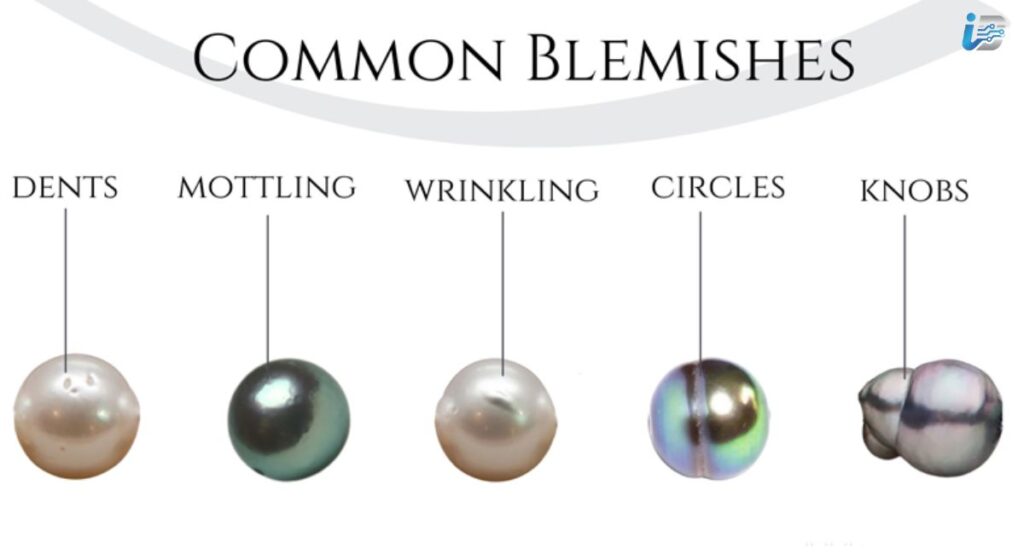
A pearl’s color depends on two core factors: the host oyster species and the exact location inside the shell where the pearl sac formed. Pearls developing near the darker edges of a black-lipped oyster trend toward deep, iridescent overtones, while those forming near paler shell regions turn out silvery or white.
Luster, meanwhile, comes down to the thickness and uniformity of nacre layers. Thin, tightly packed sheets reflect light sharply, producing the crisp mirror luster associated with fine Akoya pearls, while thicker or looser layering creates the softer, satiny orient more typical of South Sea and Tahitian gems.
Does Harvesting a Pearl Hurt the Oyster?
This is one of the most searched, least clearly answered questions about pearls from oyster farming, and the honest answer is: usually not fatally. Trained pearl harvesters open the shell with care, extract the finished pearl, and in many cases return the living oyster to the water for a possible second or third nucleation cycle.
That said, the procedure isn’t risk-free. Older or weaker oysters sometimes don’t survive the operation, which is exactly why reputable pearl aquaculture farms monitor oyster health so closely — a living oyster capable of another harvest cycle is worth far more than a single one-time yield.
How to Tell If a Pearl Came From an Oyster Naturally
Telling a genuinely natural pearls from oyster specimen apart from a cultured one almost always requires laboratory tools, since both are built from identical nacre. Gemologists use X-ray imaging to examine internal growth rings — natural pearls show consistent concentric layering straight through, while cultured pearls reveal a visible bead nucleus sitting at the center.
For everyday shoppers, price and paperwork are the more practical clues. Any pearl marketed as “natural” at a bargain price is almost certainly cultured or imitation, since authenticated natural pearls typically carry gemological lab certification and provenance documentation given how rare and valuable they truly are.
Real vs Fake Pearls: A Quick Buyer’s Checklist
Beyond lab certification, a few hands-on checks can help you gauge authenticity before buying pearl jewelry. Genuine pearls feel slightly gritty when rubbed gently against your front teeth, thanks to their layered nacre structure, while imitation pearls or glass beads glide smoothly since they lack real crystal layering.
Weight is another practical clue: authentic pearls, whether freshwater or saltwater, feel noticeably heavier than plastic or coated-glass fakes of the same size. Slight surface irregularities, subtle color variation, and a soft rather than plastic-looking sheen are all hallmarks experienced buyers and certified gemologists look for during in-person inspection, especially when comparing multiple strands side by side under natural daylight rather than store lighting.
Caring for Oyster Pearl Jewelry
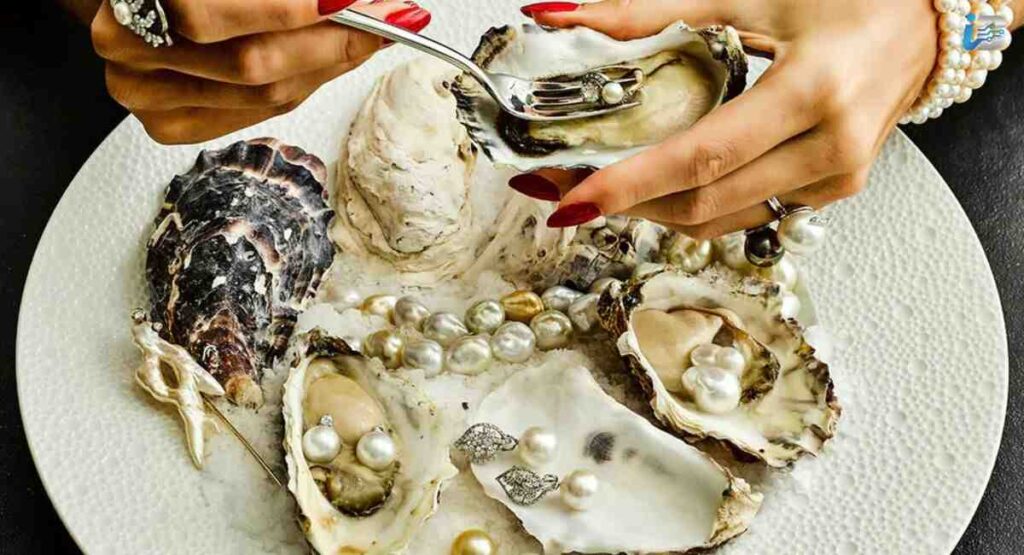
Pearls are softer and more porous than most gemstones, so daily habits matter more than most owners of pearls from oyster jewelry realize. Always put pearls on after applying perfume, hairspray, or lotion, since these chemicals can dull the delicate nacre surface and gradually shorten a piece’s lifespan over years of regular wear.
Store pearls separately in a soft jewelry pouch, away from harder gems that could scratch the surface, and gently wipe them with a soft cloth after each wear. Avoid ultrasonic cleaners entirely, since the vibrations can weaken nacre bonding and, in worst cases, trigger surface cracking on fine strands.
FAQs
How much is a real pearl from an oyster worth?
Natural pearls can range from a few hundred dollars to over $100,000+ at auction depending on size, shape, and rarity; cultured pearls typically run $50–$5,000+ depending on type (Akoya, Tahitian, South Sea).
Are oyster pearls real pearls?
Yes — both natural and cultured pearls are made of genuine nacre produced by real oysters; the only difference is whether human hands helped start the process.
How long does it take for an oyster to make a pearl?
Cultured pearls typically take 10 months to 3 years depending on species; natural pearls can take 5–20 years, if they form at all.
Are oysters killed to remove pearls?
Not always — skilled harvesters can often open the shell, remove the pearl, and return a living oyster to the water for future harvests, though some don’t survive the process.
Is pearl farming cruel?
It’s debated — reputable farms keep oysters alive and reuse them for multiple harvests, but critics argue the surgical implantation process still causes stress or harm to a living creature.
Why can’t you throw away oyster shells?
In many coastal areas it’s illegal or discouraged because shells are recycled for reef restoration, water filtration, and rebuilding oyster habitats — tossing them in regular trash disrupts that ecosystem cycle.
Do all oysters make pearls?
No. Only specific pearl oyster species, mainly within the Pinctada genus, are biologically capable of producing gem-quality pearls; oysters commonly eaten as seafood typically cannot.
Are cultured pearls considered real pearls?
Yes. Cultured pearls are made of genuine nacre through the same biological process as natural pearls, differing only in human-assisted nucleation versus pure chance.
Why are natural pearls so expensive?
Because roughly 1 in 10,000 wild oysters produces a usable natural pearl, making authentic natural pearls extraordinarily rare compared to farmed cultured alternatives.
Can a pearl form without any irritant at all?
It’s extremely uncommon. Nearly every pearl, natural or cultured, begins with a foreign object or implanted nucleus triggering the oyster’s nacre-secreting defense response.
Conclusion
Understanding how pearls from oyster species actually form makes it far easier to shop with confidence, whether you’re drawn to a classic Akoya strand, a bold Tahitian pendant, or an heirloom natural pearl. Every gem on the market, cultured or wild, tells the same quiet story: a mollusk turning irritation into something worth treasuring for generations, one microscopic nacre layer at a time. The next time you clasp on a pearl necklace, you’ll know exactly what patient, living process made it possible.

Welcome to Infoz Style I am Karl Braun ,an Ai – powered SEO , and Content Writer With 4 Years of experience. I help Websites Rank higher , grow traffic , and look amazing . My goal is to make SEO and Web design simple and effective for everyone.
Let`s achieve more together !