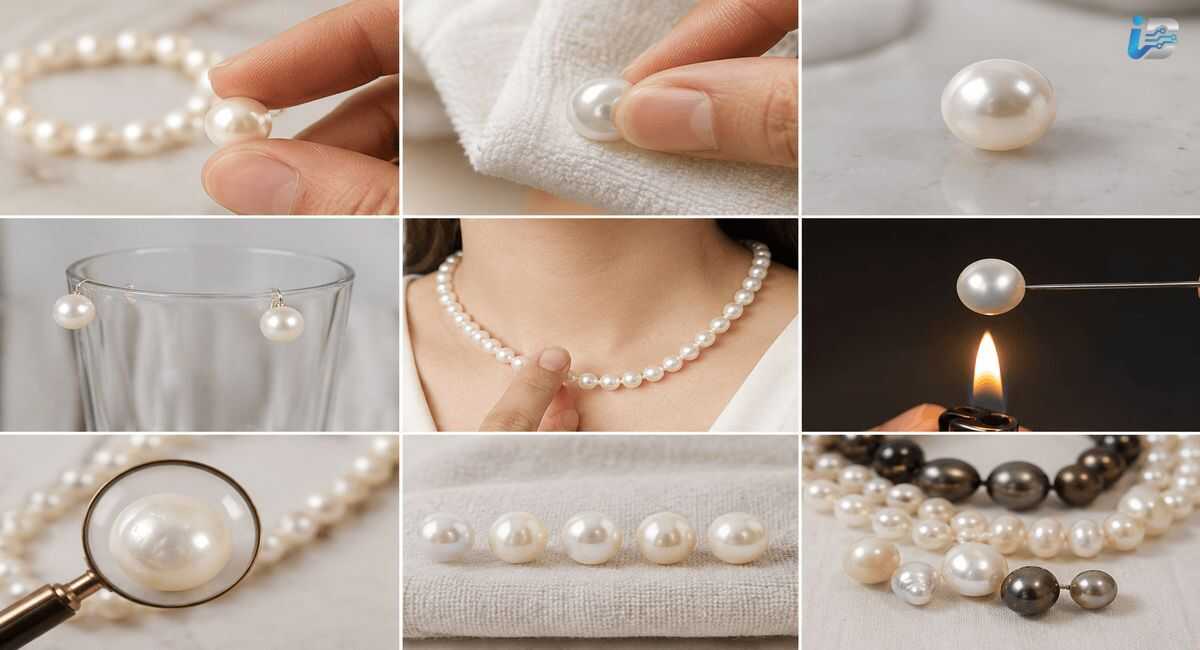
If you are wondering how to identify real pearls at home, you are not alone. Many buyers struggle to tell the difference between genuine pearls and modern imitations because fake pearls have become more realistic than ever. Fortunately, you can perform several simple checks without special equipment.
By examining the surface texture, luster, shape, weight, and temperature of a pearl, you can gain valuable clues about its authenticity. These easy methods help you understand pearl authenticity and avoid costly mistakes when purchasing jewelry. Whether you own a family heirloom or a new necklace, learning how to tell if pearls are real can help you confidently recognize authentic pearls and make smarter buying decisions.
What Makes Real Pearls Different from Fake Pearls?
Real pearls form naturally inside mollusks such as oysters and mussels. During pearl formation, layers of nacre made from calcium carbonate gradually build around an irritant. These pearl layers create the beauty and depth found in natural pearls and cultured pearls. This unique process gives authentic pearls their unmistakable character and value.
By contrast, synthetic pearls, faux pearls, plastic pearls, glass pearls, and many costume pearls are manufactured using artificial materials. These alternatives may look convincing from a distance. However, they lack the complex internal structure of real gemstone pearls. Understanding these authentic pearl characteristics is the first step in successful real pearl identification and effective spotting fake pearls.
Understanding How Real Pearls Form Naturally
Unlike artificial alternatives, freshwater pearls, saltwater pearls, Akoya pearls, Tahitian pearls, South Sea pearls, and baroque pearls develop through biological processes. The natural buildup of nacre layers creates exceptional beauty, durability, and depth.
Check the Surface Texture with the Pearl Tooth Test
One of the oldest at-home pearl tests is the famous tooth test for pearls. Gently rub a pearl against the edge of your front teeth. Authentic pearls usually feel slightly gritty because microscopic layers of nacre create a textured surface. This unique pearl texture helps many experts begin identifying genuine pearls.
Although this genuine pearl test is useful, it should never be your only method. High-quality imitation pearls sometimes mimic natural textures surprisingly well. Therefore, combining several pearl authenticity test techniques produces more accurate results and helps you confidently determine if pearls are real.
Limitations of the Tooth Test
Modern manufacturing techniques allow some fake pearls to imitate authentic surfaces. Because of this, experienced jewelers use additional tests to confirm pearl authenticity rather than relying solely on texture.
Examine Pearl Luster and Shine Closely
Perhaps the strongest visual clue lies in pearl luster. Genuine pearls display a rich glow that seems to come from within. Light reflects through translucent layers of nacre, producing remarkable depth. This natural pearl sheen and elegant pearl shine create an appearance that is difficult for synthetic materials to duplicate.
Fake pearls often exhibit a flat or overly glossy surface. Their reflections may appear artificial or one-dimensional. When examining real pearls vs fake pearls, pay close attention to pearl reflection, pearl overtone, and overall brightness. Genuine pearls reveal complexity while imitation versions often appear uniform and lifeless.
Signs of Artificial Shine
Artificial coatings can create excessive brightness. However, they usually fail to reproduce the layered beauty created by natural pearl composition and authentic nacre layers.
Use the Temperature Test to Verify Authenticity
Another popular method is the pearl temperature test. Genuine pearls typically feel cool when first touched. After resting against your skin, they warm gradually. This reaction occurs because of their natural pearl composition and internal structure.
Many synthetic pearl differences become obvious during this test. Most plastic-based pearls quickly match room temperature. However, glass-based imitations may also feel cool initially. For this reason, the temperature method works best when combined with other pearl authenticity check techniques.
Why Temperature Matters
The internal structure of authentic pearls responds differently to heat than artificial materials. This subtle difference often provides another useful clue during fake pearl identification.
Inspect Drill Holes for Signs of Genuine Pearls
Examining pearl drill holes can reveal valuable information. Authentic pearls generally feature clean openings with smooth edges. Because the pearl consists of solid nacre layers, drilling usually leaves a neat appearance without obvious damage.
Imitations often expose a hidden core beneath the surface. During drill hole inspection, you may notice visible pearl coating, rough edges, or even peeling pearl coating around the opening. These warning signs frequently indicate manufactured pearls rather than authentic gemstones.
What Professionals Look For
Experts often perform detailed pearl inspection using magnification. Even small irregularities around drill holes can reveal whether a pearl is genuine or artificial.
Compare the Weight and Density of Pearls
Authentic pearls possess noticeable density. Performing a simple pearl weight test allows you to compare suspicious pearls with verified genuine examples. Real pearls often feel heavier than many people expect because their internal structure contains dense layers of calcium carbonate.
Most artificial pearls feel lighter due to plastic or hollow construction. Comparing pearl weight between samples can help distinguish authentic jewelry from lower-quality imitations. While not definitive alone, this method strengthens overall pearl authentication efforts.
Understanding Pearl Density
Density varies among pearl types. Larger South Sea pearls may feel heavier than smaller Akoya pearls, yet both demonstrate substantial weight compared with many imitation alternatives.
Observe Shape, Size, and Natural Imperfections
Nature rarely produces perfection. Authentic pearls often display subtle variations in size and appearance. These small pearl imperfections, slight asymmetries, and delicate surface marks are normal signs of genuine growth.
When studying pearl shape, look for minor inconsistencies. Perfectly identical pearls can indicate mass production. Genuine strands frequently contain subtle differences that support authenticity. Understanding pearl surface imperfections, pearl roundness, and overall pearl surface quality helps consumers make informed decisions.
The Beauty of Natural Variation
Many collectors value pearls with unique characteristics because they reflect authentic growth inside living organisms rather than factory production.
Real Pearls vs Fake Pearls: Key Differences at a Glance
The easiest way to understand real pearls vs fake pearls is through direct comparison. Each feature tells part of the story and helps buyers recognize authenticity quickly.
| Feature | Real Pearls | Fake Pearls |
| Texture | Slightly gritty | Smooth |
| Luster | Deep glow | Flat shine |
| Temperature | Cool initially | Room temperature |
| Weight | Dense | Lightweight |
| Shape | Natural variation | Uniform |
| Drill Holes | Clean | Coating visible |
This simple imitation pearl comparison highlights the most important pearl quality indicators. Understanding these differences improves your confidence when evaluating jewelry and strengthens your knowledge of genuine vs faux pearls.
When Should You Get Pearls Professionally Appraised?
Home testing provides useful clues. However, certain situations require a professional evaluation. A valuable heirloom, luxury necklace, or estate collection deserves a complete professional pearl appraisal. Experts can accurately identify pearl type, age, quality, and authenticity.
A qualified GIA gemologist or professional from the American Gem Society uses advanced tools unavailable to most consumers. Their analysis supports insurance claims, estate planning, resale evaluations, and formal jewelry appraisal documentation.
Professional Authentication Methods
Experts often conduct microscope examination, UV light testing, and X-ray pearl testing. These techniques provide reliable evidence of authenticity and may support the issuance of a certificate of authenticity.
How to Buy Authentic Pearls with Confidence
The smartest buyers focus on education before making a purchase. If you plan to buy real pearls, learn basic pearl grading principles and study a reliable pearl quality guide. Understanding luster, shape, surface quality, and size helps you recognize value immediately.
Working with trusted pearl sellers reduces risk significantly. Reputable jewelers provide pearl certification, transparent grading information, and detailed descriptions. Whether purchasing a genuine pearl necklace, luxury earrings, or other authentic pearl jewelry, proper research protects your investment.
Choosing the Right Pearl Dealer
Look for sellers offering certified pearls, documented pearl grading standards, and recognized certified pearl jewelry collections. Trustworthy retailers provide information that supports long-term pearl investment decisions.
FaQs
How to know original pearl?
A real pearl feels slightly rough against your teeth, has a deep natural luster, and often shows small surface imperfections, while a fake pearl feels smooth, looks overly shiny, and usually has a perfectly uniform surface.
Do real pearls sink or float?
Real pearls usually sink in water because they are denser than most imitation pearls.
Are old pearls worth anything?
Yes, old pearls can be highly valuable depending on their size, quality, rarity, and condition.
How to tell if a pearl is real with a magnet?
A magnet cannot reliably determine pearl authenticity because real and fake pearls are generally non-magnetic.
How to identify real pearls at home with vinegar?
Real pearls may show slight surface damage in vinegar because their nacre contains calcium carbonate.
What is the easiest way to tell if pearls are real?
The easiest method is the tooth test, where real pearls feel slightly gritty while fake pearls feel smooth.
How much is 1 pearl worth today?
A single pearl can be worth anywhere from a few dollars to several thousand dollars depending on its type, size, luster, and quality.
Conclusion
Learning how to identify real pearls does not require specialized equipment. By evaluating texture, luster, temperature, weight, shape, and drill holes, you can significantly improve your ability to recognize authentic pearls. These techniques make real pearl identification easier and help you avoid expensive mistakes.
Whether you are comparing real pearls vs fake pearls, researching pearl value, following a trusted pearl buying guide, or evaluating potential investment pearls, knowledge remains your most powerful tool. When uncertainty remains, seek professional verification. Authentic pearls offer beauty, rarity, exceptional pearl durability, and lasting value that can be enjoyed for generations.

Welcome to Infoz Style I am Karl Braun ,an Ai – powered SEO , and Content Writer With 4 Years of experience. I help Websites Rank higher , grow traffic , and look amazing . My goal is to make SEO and Web design simple and effective for everyone.
Let`s achieve more together !