
Silver jewelry adds timeless charm to every outfit although daily exposure to air, moisture, and beauty products can slowly dull its sparkle. Thankfully, cleaning silver jewelry at home is easier than most people think. With the right silver cleaning solution and a gentle approach, you can remove tarnish and bring back its brilliant shine without damaging delicate surfaces.
Many people use a homemade silver cleaner because it offers a safer and more affordable alternative to harsh chemicals. Simple tools like a soft microfiber cloth and a quality silver polishing cloth can make a dramatic difference. Regular care not only improves appearance yet also helps your favorite silver pieces last beautifully for many years.
Why Does Silver Jewelry Tarnish?
Silver reacts with moisture and airborne particles every day. Tiny amounts of sulfur compounds in the air combine with silver and create silver sulfide, which appears as dark discoloration. This process is known as silver oxidation. Heat, humidity, perfume, sweat, and even kitchen fumes speed up the reaction. That’s why jewelry stored in bathrooms often develops stains faster.
Another common reason behind silver discoloration is exposure to lotion, sunscreen, and makeup residue. Even expensive sterling silver pieces tarnish eventually because they contain small amounts of copper. Unlike rust, tarnish usually stays on the surface. So if you wonder, can tarnished silver be restored, the answer is yes. Proper cleaning can often restore silver shine without damaging the jewelry.
Best Ways to Clean Silver Jewelry at Home
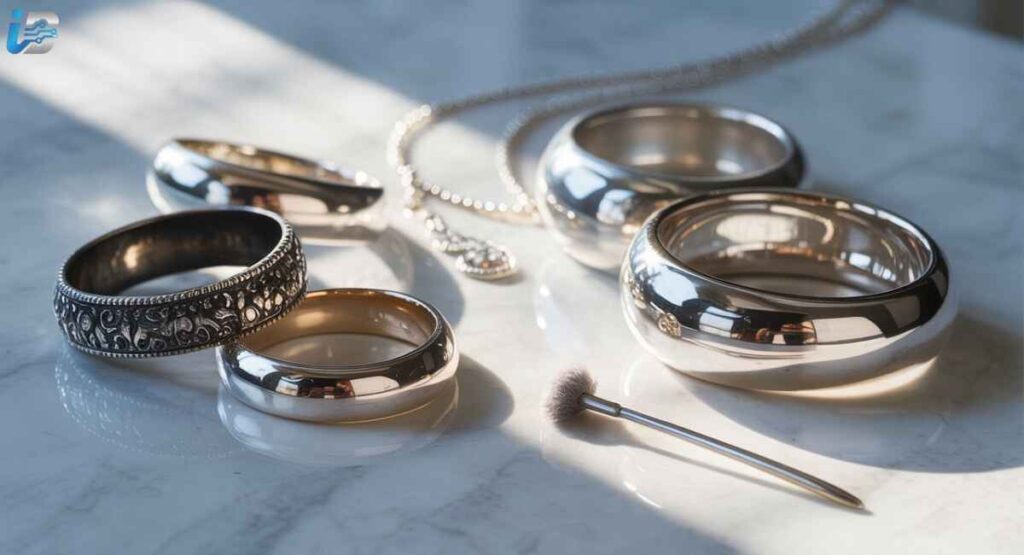
The safest way to clean silver starts with warm water and mild dish soap. This simple method works well for everyday dirt and oils. Mix a few drops of soap into lukewarm water. Let your jewelry soak using a gentle silver soaking method for fifteen minutes. Then wipe it carefully with a soft microfiber cloth. This process removes grime without scratching delicate surfaces.
If you prefer a natural silver cleaner, avoid aggressive chemicals. A gentle homemade silver cleaner made with soap and warm water protects fragile jewelry while removing buildup. Many experts recommend this form of DIY silver cleaning because it works well on delicate silver jewelry and minimizes abrasion. If you want to learn how to clean silver without damaging it, simple methods usually work best.
| Cleaning Method | Best For | Risk Level | Cost |
| Mild soap and water | Light dirt | Very Low | Low |
| Vinegar soak | Moderate tarnish | Low | Low |
| Baking soda method | Deep tarnish | Medium | Low |
| Professional polishing | Antique jewelry | Very Low | High |
How to Clean Silver with Baking Soda
One of the oldest methods for cleaning silver jewelry with baking soda involves making a thick baking soda paste. Mix water with baking soda until it forms a soft cream. Rub the paste gently onto tarnished areas using a cloth. Leave it for a minute before rinsing. This technique works especially well for badly tarnished silver and dark patches.
Still, many people ask, does baking soda damage silver? It can if you scrub too hard. Baking soda has mild abrasiveness. Excessive rubbing may scratch polished finishes. Therefore, never use rough brushes or paper towels. Instead, use a non-abrasive cleaner approach with soft fabrics and slow movements. This is one of the safest safe silver cleaning methods when done correctly.
“Silver care is less about force and more about patience.”
Cleaning Silver with Aluminum Foil & Hot Water
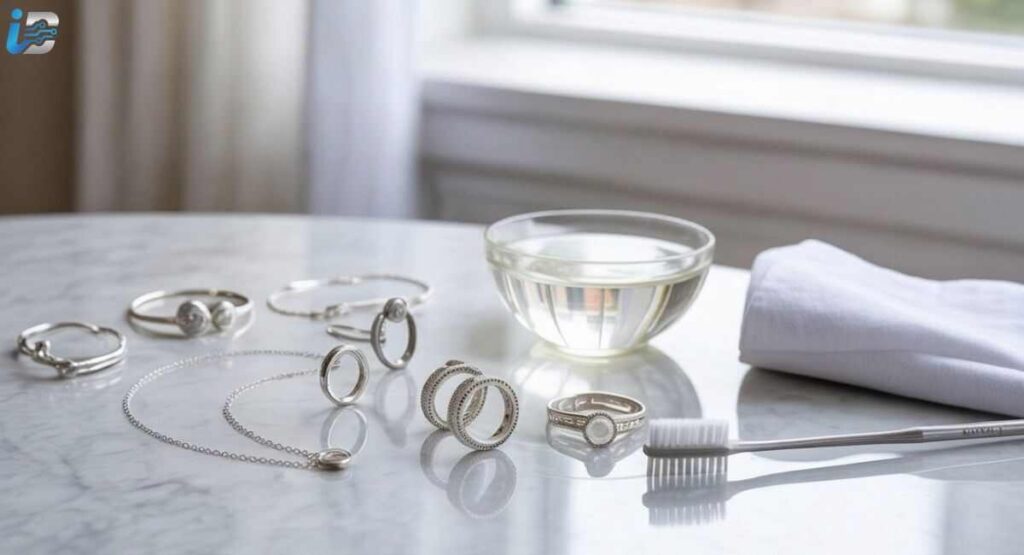
The famous aluminum foil cleaning method works through science rather than friction. During this process, tarnish transfers from the silver onto the foil through electrolytic silver cleaning. Fill a bowl with hot water, line it with foil, and add salt and baking soda. Then place silver jewelry into the mixture for several minutes.
This reaction breaks down silver sulfide without heavy scrubbing. Many jewelers consider this one of the fastest ways to remove silver tarnish from chains and bracelets. However, avoid using this technique on gemstones or glued settings because baking soda and hot water may weaken adhesives. If you need how to clean silver chains safely, this method works wonderfully on plain chain designs.
How to Clean Heavily Tarnished Silver Jewelry
Sometimes silver turns almost black. Deep stains usually develop after long exposure to moisture and oxygen. To tackle how to remove black tarnish from silver, combine white vinegar for silver with warm water. Add a drop of lemon essential oil for freshness. Let the jewelry soak for five to ten minutes before polishing gently.
For stubborn stains, some people also use a diluted witch hazel solution because it lifts oils and residue naturally. However, deeply tarnished antiques may require professional silver cleaning. Experts use advanced silver polishing techniques that preserve fragile surfaces. This matters especially for vintage rings, heirlooms, and engraved jewelry.
How to Clean Different Types of Silver Jewelry
Different jewelry needs different care. To clean silver rings, use a soft brush around gemstones. Dirt often hides beneath settings. When cleaning silver engagement rings, avoid harsh pressure because prongs may loosen over time. For earrings, gentle wiping prevents bacteria buildup and keeps the surface polished.
Long necklaces require extra attention. To clean silver necklaces and sterling silver chains, untangle them first before soaking. This prevents trapped moisture. Similarly, when you clean silver bracelets, dry clasps carefully because water trapped inside can accelerate tarnish. Owners of silver-plated jewelry should use extra caution since aggressive polishing can remove the outer silver layer.
| Jewelry Type | Best Cleaning Method | Special Care |
| Rings | Soap and cloth | Protect gemstones |
| Necklaces | Foil soak | Dry chain links well |
| Earrings | Mild soap | Maintain hygiene |
| Bracelets | Soft polishing | Clean clasps carefully |
Mistakes to Avoid While Cleaning Silver Jewelry
One major mistake involves using toothpaste. Many online guides suggest it, yet people still ask, can toothpaste clean silver safely. The truth is simple. Toothpaste contains abrasive particles that scratch silver surfaces. Likewise, bleach and strong detergents damage finishes and increase corrosion on silver.
Another mistake involves poor storage habits. Humid spaces accelerate tarnish rapidly. Avoid leaving jewelry near sinks or windows. Exposure to household cleaning chemicals and chlorine water also damages silver. Frequent chlorine exposure weakens metal over time. Smart handling protects jewelry better than aggressive polishing ever could.
How to Prevent Silver Jewelry from Tarnishing
Good storage habits dramatically slow tarnish. Keep jewelry inside an airtight jewelry box or a felt-lined jewelry box to block humidity. Many collectors add silica gel packs and anti-tarnish strips because they absorb moisture before it reaches the silver surface. This simple trick helps maintain tarnish-free silver for longer periods.
A smart jewelry care routine also matters. Put jewelry on after perfume and lotion dry completely. Oils and creams create stubborn residue over time. If you wonder how to stop silver jewelry from tarnishing, consistent maintenance works better than occasional deep cleaning. Proper silver jewelry storage and regular wiping preserve shine naturally.
Professional Silver Cleaning vs DIY Methods
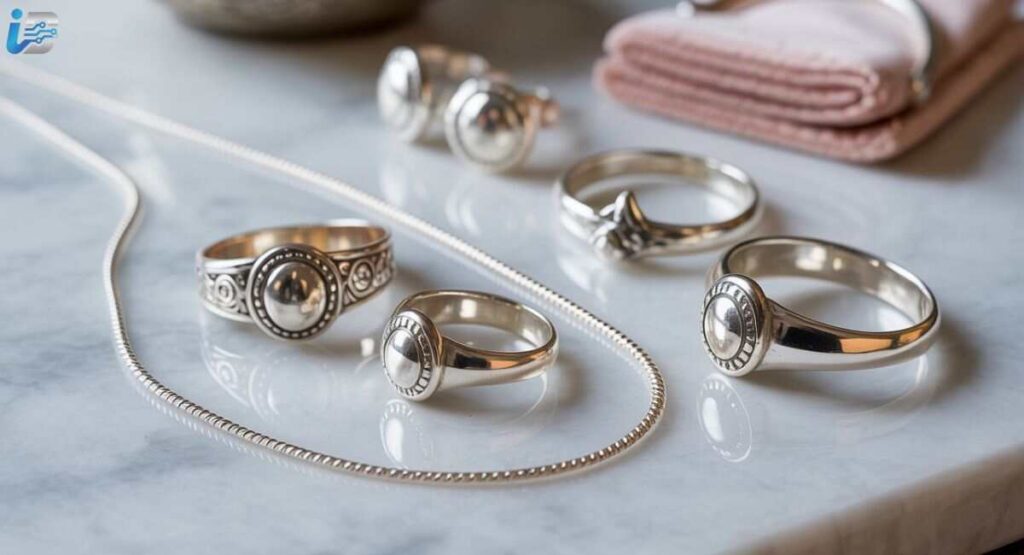
Home cleaning works well for routine care. Most people can handle basic silver jewelry maintenance using soap, cloths, and natural cleaners. In fact, many jewelers encourage natural ways to polish silver jewelry because gentle cleaning preserves the metal’s original finish longer.
However, antique items often need expert care. Professional jewelers use specialized tools and advanced jewelry polish compounds to restore damaged pieces safely. This becomes important for engraved heirlooms or severely oxidized silver jewelry. Experts also know the difference between white gold vs silver, which prevents accidental damage from incorrect cleaning methods.
| DIY Cleaning | Professional Cleaning |
| Affordable | More expensive |
| Good for routine care | Ideal for antiques |
| Easy at home | Deep restoration |
| Limited polishing power | Expert finishing results |
Frequently Asked Questions About Cleaning Silver Jewelry
How often should silver be cleaned?
Most silver jewelry benefits from light cleaning every few weeks. Frequent wear may require monthly polishing. Gentle care prevents buildup before it becomes severe.
Does vinegar tarnish silver?
No. Many people ask, does vinegar tarnish silver because vinegar is acidic. When diluted properly, vinegar safely removes tarnish and grime.
What is the best cloth for polishing silver?
The best cloth for polishing silver is a lint-free microfiber or specialized silver polishing cloth designed for jewelry care.
How do you clean silver naturally?
People searching how do you clean silver naturally often prefer soap, vinegar, or baking soda methods. These natural solutions avoid toxic chemicals while protecting silver surfaces.
Conclusion
Learning how to clean silver jewelry isn’t complicated once you understand what causes tarnish. Silver reacts naturally with air, moisture, and daily products. Thankfully, gentle methods can safely restore shine without damaging the surface. Whether you use a simple soap soak or an advanced foil treatment, consistency matters more than harsh scrubbing.
The key to lasting brilliance lies in prevention. Smart proper silver storage, regular polishing, and careful handling protect silver for decades. With the right habits, your favorite jewelry can keep its glow and elegance for generations.

Welcome to Infoz Style I am Karl Braun ,an Ai – powered SEO , and Content Writer With 4 Years of experience. I help Websites Rank higher , grow traffic , and look amazing . My goal is to make SEO and Web design simple and effective for everyone.
Let`s achieve more together !