Understanding the permanent address meaning is important because it affects many parts of your daily life. A permanent address is the location you consider your long-term home and the address used for official records, banking, taxes, and government services. Unlike a Current Address or Temporary Address, it remains stable even when you move for work, education, or travel.
Your Permanent Home Address helps establish your identity, supports Proof of Residence, and serves as your Official Address for important documents. Whether you are opening a bank account, applying for a driver’s license, or filing taxes, having a clear permanent address helps ensure smooth communication and legal compliance.
Key Takeaways
| Topic | Summary |
| Permanent Address | A long-term address used for legal and official purposes |
| Current Address | The place where you currently live |
| Mailing Address | The location where you receive mail |
| Residential Address | The physical place where you reside |
| Virtual Address | A digital mail solution that may qualify in some situations |
| Importance | Required for taxes, voting, banking, insurance, and identification |
What Is a Permanent Address?
A Permanent Address is the long-term location that serves as your Primary Residence and official point of contact. It appears on many important records including your Driver’s License, Passport, Tax Return, and various Government Records. Most government agencies and financial institutions use this address when they need to verify your identity or determine your legal residence.
Unlike a Temporary Address, a permanent address remains stable even when your living situation changes for a short period. For example, a college student may live in a dorm during the school year while keeping a family home as their Permanent Home Address. This Fixed Address becomes part of your Official Records and helps establish Legal Recognition, Identity Verification, and Proof of Residence throughout your adult life.
Permanent Address Definition
Think of a permanent address as your official home base. It is the location that represents your Legal Residence and often serves as your Resident Address for government, financial, and legal purposes. In the United States, institutions rely on this address when processing applications, verifying residency, and maintaining accurate records.
A permanent address usually remains connected to you for many years. Whether it is a house you own, a family property, or a long-term rental, this address supports Proof of Residency, establishes Long-Term Residency, and determines eligibility for many public and private services.
Key Characteristics of a Permanent Address
A permanent address is generally a Physical Address tied to a Residential Property where you have a lasting connection. It is not expected to change frequently. Stability is one of its most important features because organizations use it to track official communications and maintain accurate documentation.
This address also serves as an Official Address for many legal processes. It may determine local voting districts, tax responsibilities, insurance rates, and access to State Benefits. Because of this, keeping your permanent address updated is essential.
Permanent Address vs Temporary Address
The difference between a permanent and temporary address often creates confusion. A temporary address is used for short-term living arrangements such as internships, work assignments, vacations, or temporary relocation. These addresses may change several times within a year.
A permanent address remains your long-term reference point. During a Relocation or Residential Move, you may temporarily live somewhere else while still maintaining your permanent address until you officially establish a New Address and complete a formal Address Change.
Why Is a Permanent Address Important?
Your permanent address affects almost every area of modern life. Government offices, banks, schools, insurance companies, and employers rely on it to verify your identity and maintain accurate records. Without a valid permanent address, obtaining services can become difficult and time-consuming.
A permanent address also provides continuity. Even when you move, travel, or temporarily relocate, institutions can still identify you through your official records. This consistency helps prevent fraud, reduces administrative errors, and ensures important information reaches you when needed.
Legal and Government Purposes
Government agencies require a permanent address for many official activities. Your address helps establish Legal Jurisdiction, determines eligibility for Voter Registration, and supports important Civic Duties such as Jury Duty. It is also used for Government Correspondence and identity verification.
Many Legal Documents require a permanent address. Applications for a Driver’s License, Passport, and Vehicle Registration often cannot proceed without accurate residency information. Maintaining updated records helps ensure compliance with state and federal requirements.
Financial Importance

Financial organizations rely heavily on permanent addresses. When opening a Bank Account, submitting a Credit Card Application, or completing a Loan Application, lenders use your address to verify identity and assess risk.
Banks and other Financial Institutions also use permanent addresses to maintain Financial Records, process Financial Transactions, and comply with anti-fraud regulations. Accurate address information helps protect both customers and businesses.
Personal Identity and Stability
A permanent address creates a sense of stability. It connects you to a community and establishes a documented place where you belong. This connection often supports applications for housing, employment, education, and healthcare.
Many organizations require Proof of Residence or Residence Proof before providing services. Utility statements, lease agreements, and property records linked to a permanent address help demonstrate long-term residency and trustworthiness.
Access to Essential Services
Many services depend on a verified address. Access to Healthcare Services, educational opportunities, public programs, and insurance products often begins with address verification.
Your address can also affect Insurance Coverage, healthcare provider networks, and local service availability. In some states, residency determines eligibility for discounted tuition, healthcare assistance, and various public programs.
What Is Considered a Permanent Address? (With Examples)
Many people wonder what actually qualifies as a permanent address. In most cases, a permanent address is a location where you have a lasting connection and where your important records remain registered. It can be a house you own, a long-term rental property, or even a family residence if you consistently use it as your Permanent Home Address for official matters.
A valid Permanent Address Example could be a family home in Texas where a college student keeps their Official Address while studying in another state. Another example is a rented apartment used as a Long-Term Residence for several years. What matters most is consistency, documentation, and meeting basic Permanent Address Requirements when dealing with institutions.
Common Examples of Permanent Addresses
The most common permanent addresses include privately owned homes, long-term leased apartments, family residences, and military home-of-record addresses. These locations often appear on Government Records, insurance policies, tax filings, and identification documents.
Many Americans also use a residence inherited from family members as their Primary Residence even when they temporarily live elsewhere. As long as official records remain connected to that property, it may continue serving as a permanent address.
Situations Where an Address May Not Be Permanent
Not every address qualifies as permanent. Hotels, short-term vacation rentals, and temporary work accommodations usually fail to meet Proof of Residency requirements because they lack long-term stability.
Similarly, a short-term dormitory room or temporary housing during a work contract may serve as a Current Address but not necessarily as a permanent address. Government agencies typically require stronger evidence of residence before granting official recognition.
Real-Life Examples
Imagine Sarah attends college in California but keeps her family home in Florida as her permanent address. Her Driver’s License, Tax Records, and Voter Registration remain linked to Florida. In this case, the family home acts as her permanent address.
Now consider Mark, who works remotely and rents the same apartment in Colorado for six years. He uses that address for his Bank Account, Insurance Policy, and tax returns. That apartment becomes his recognized permanent residence.
Permanent Address vs Current Address

The topic of Permanent Address vs Current Address creates confusion because both addresses can sometimes be identical. However, they serve different purposes. A permanent address represents your long-term legal home while a current address identifies where you are physically living today.
Your current address may change several times due to work assignments, education, or travel. Meanwhile, your permanent address often remains stable and continues to appear on official records. Understanding this distinction helps prevent problems when completing government forms or financial applications.
Main Differences
The biggest difference is duration. A Current Address reflects your present living situation. A permanent address reflects your long-term residential connection and legal identity.
For example, a person completing a six-month internship may temporarily live in New York while maintaining a permanent address in Ohio. The temporary apartment becomes the current address while Ohio remains the permanent residence.
Permanent Address vs Current Address Comparison
| Feature | Permanent Address | Current Address |
| Purpose | Legal and official use | Present living location |
| Duration | Long-term | Temporary or changing |
| Government Forms | Usually required | Sometimes required |
| Tax Records | Frequently used | Less common |
| Identity Verification | Primary address | Secondary address |
When Both Addresses Are the Same
Many homeowners have the same permanent and current address. If you live full-time in your house and use it for official purposes, both addresses become identical.
This situation is common among families, retirees, and individuals with stable living arrangements. In these cases, there is no practical difference between the two addresses.
Permanent Address vs Residential Address
The discussion around Permanent Address vs Residential Address often leads to misunderstanding because these terms appear similar. A Residential Address simply identifies where you physically live. A permanent address focuses more on legal and official residency.
In many situations, both addresses are the same. However, students, military personnel, and traveling professionals may maintain different permanent and residential addresses. Knowing the distinction helps avoid mistakes on official forms.
What Is a Residential Address?
A Residential Address is the location where you currently reside. This address is associated with your everyday activities, utility services, and local living arrangements.
Most Utility Bill statements and service accounts use a residential address. It helps service providers determine where to deliver utilities, internet services, and other residential products.
Key Differences Between Permanent and Residential Addresses
A residential address may change frequently during a person’s life. A permanent address usually remains more stable and appears on important legal records.
The difference becomes important when applying for loans, voting, filing taxes, or proving residency. Many organizations request both addresses when they are not identical.
Home Address vs Residential Address
The phrase Home Address vs Residential Address is another common point of confusion. In everyday conversation, people often use these terms interchangeably.
However, a home address may carry emotional or family significance while a residential address simply identifies where someone currently lives. In many cases, both point to the same property.
Permanent Address vs Mailing Address
The comparison between Permanent Address vs Mailing Address becomes important whenever mail delivery differs from your legal residence. A Mailing Address exists specifically to receive letters, packages, and official correspondence.
Some people prefer separate mailing addresses for convenience, privacy, or business purposes. While a mailing address may receive communications, it does not automatically qualify as a permanent address.
What Is a Mailing Address?
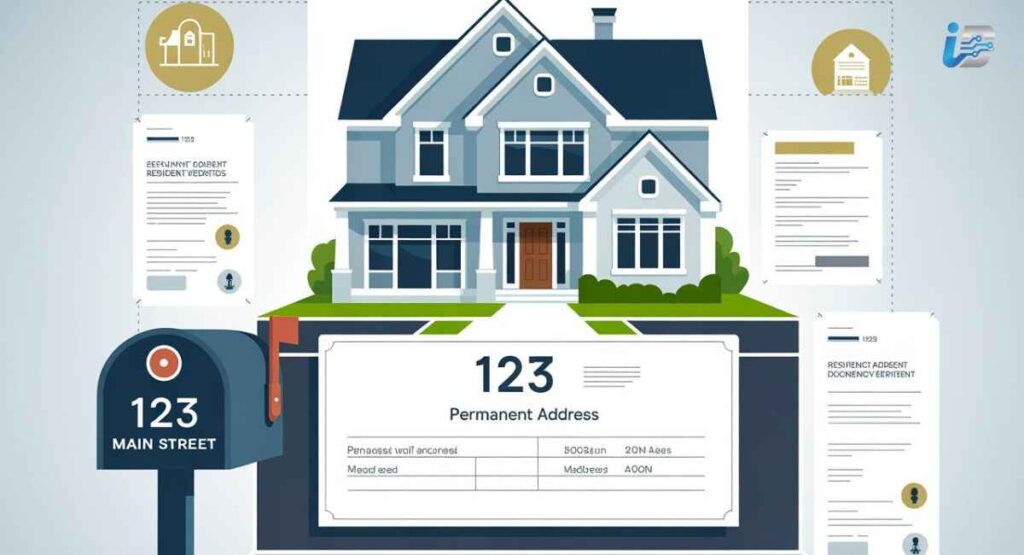
A mailing address is the destination where postal items arrive. It can be your home, office, family residence, or a Post Office Box depending on your needs.
Many individuals use alternative mailing addresses to ensure reliable mail delivery during travel, relocation, or temporary housing situations.
Why Some People Use Different Mailing Addresses
Frequent travelers often choose a separate Permanent Mailing Address to avoid missing important documents. Business owners may also use different mailing addresses to separate personal and professional correspondence.
Others use alternative addresses to improve security and maintain greater privacy when sharing contact information publicly.
Permanent Address vs Mailing Address Comparison
| Feature | Permanent Address | Mailing Address |
| Main Purpose | Legal residence | Receiving mail |
| Required for Taxes | Yes | Sometimes |
| Used by Banks | Frequently | Occasionally |
| May Be a PO Box | Usually No | Yes |
| Identity Verification | Commonly Used | Limited Use |
Permanent Address vs Correspondence Address
Understanding Permanent Address vs Correspondence Address can prevent communication issues. A Correspondence Address is simply the location where someone prefers to receive messages, notices, and documents.
Unlike a permanent address, a correspondence address does not necessarily establish residency. It functions primarily as a communication destination rather than a legal residence.
What Is a Correspondence Address?
A Correspondence Address is used by organizations when sending letters, statements, invoices, and notifications. It may be temporary and can change depending on personal circumstances.
Many professionals use office locations as correspondence addresses while maintaining a separate permanent address for legal purposes.
Key Differences Explained
A permanent address establishes residency, identity, and official affiliation. A correspondence address focuses on communication efficiency.
Government agencies may allow different correspondence addresses while still requiring a permanent address for official records and residency verification.
When You Should Use a Correspondence Address
People commonly use correspondence addresses during a Temporary Relocation, extended travel period, or business assignment. This approach helps ensure important mail reaches the correct location.
Students studying abroad and professionals working overseas often designate correspondence addresses to receive documents without affecting their permanent residency records.
When Do You Need a Permanent Address?
A permanent address becomes essential in many situations throughout life. Government agencies, employers, schools, healthcare providers, and financial organizations often require a verified address before approving services or processing applications. Without a stable address, important paperwork can become delayed and access to certain benefits may become difficult.
Your permanent address also helps establish trust and accountability. It serves as a recognized location tied to your identity, residency, and legal obligations. Whether you are applying for insurance, enrolling in college, or opening financial accounts, a permanent address often acts as a foundation for verification.
Government Documentation
Many government processes require a permanent address. Applications involving a Driver’s License, Passport, Vehicle Registration, and Voter Registration depend on accurate residency information. Government offices use these records to confirm identity and maintain reliable databases.
A permanent address also determines Legal Jurisdiction for local government matters. It affects voting districts, tax obligations, public assistance eligibility, and participation in various Civic Duties such as Jury Duty.
Employment and Education
Employers often request a permanent address during hiring because they must maintain accurate employee records. Address information may also be required for payroll, tax reporting, and benefits administration.
Educational institutions frequently require residency information to determine eligibility for In-State Tuition and other programs. Many colleges ask for Proof of Residency before granting resident tuition rates or state-funded benefits.
Financial and Insurance Requirements
Financial organizations rely heavily on address verification. Opening a Bank Account, applying for a Credit Card, submitting a Loan Application, or requesting certain Banking Services usually requires a valid permanent address.
Insurance providers also depend on address information. Your location can influence Insurance Coverage, premiums, policy availability, and claim processing. Maintaining an updated address helps ensure uninterrupted protection and communication.
Can You Use a Virtual Address as a Permanent Address?
Technology has changed how people manage mail and residency. Today, many individuals use a Virtual Address to receive mail while traveling, working remotely, or living in multiple locations. However, whether a virtual address can function as a permanent address depends on the specific organization and legal requirements involved.
Some institutions accept virtual addresses for communication purposes while others require a traditional residential location. Understanding these differences can help you avoid application rejections and verification problems.
What Is a Virtual Address?
A Virtual Address is a location provided by a Virtual Mailbox Service that receives mail on your behalf. Instead of collecting physical mail in person, you can access scanned copies through a secure online platform.
Most services provide features such as Mail Scanning, Mail Forwarding Service, Remote Mail Access, and package management. These tools make virtual mailboxes popular among remote workers and international travelers.
Benefits of Using a Virtual Address
A virtual address offers flexibility and convenience. Users can access important mail from anywhere in the world without being physically present at the address location.
Many people choose a Digital Mailbox because it improves Address Privacy and reduces the risk of lost mail. Business owners, remote workers, and frequent travelers often appreciate the convenience of centralized mail management.
Limitations and Legal Considerations
Although virtual addresses offer many benefits, some government agencies still require a residential address for official purposes. Certain applications may request a Real Street Address rather than a commercial mailbox location.
Organizations conducting strict Identity Verification procedures may reject a virtual address when a residential location is legally required. Requirements can vary by state, agency, and institution.
Who Benefits Most from Virtual Addresses?
A virtual address can be especially useful for people with flexible lifestyles. Individuals who travel frequently often need reliable access to mail without maintaining a traditional residence.
Common users include those seeking a Digital Nomad Address, an Expat Address, or a secure mailing solution during long-term travel. Business owners and remote professionals also benefit from the flexibility virtual mailbox services provide.
Virtual Address vs Traditional Permanent Address
| Feature | Virtual Address | Traditional Permanent Address |
| Physical Residence | No | Yes |
| Mail Access | Digital | Physical |
| Mail Forwarding | Yes | Limited |
| Government Acceptance | Varies | Widely Accepted |
| Privacy Protection | High | Moderate |
| Remote Access | Excellent | Limited |
How to Change or Update Your Permanent Address
Moving to a new home requires more than unpacking boxes. An official Address Change ensures that important organizations know where to contact you and where to maintain your records. Failing to update your information can lead to missed notices, delayed services, and administrative complications.
The process becomes easier when completed promptly. Updating your address across all major institutions helps protect your financial, legal, and personal interests while ensuring continuity of service.
Updating Government Agencies
One of the first steps after moving is completing an Address Update with relevant government offices. This often includes updating information associated with your Driver’s License, voter registration records, and vehicle registration documents.
Government records should reflect your New Address as quickly as possible. Accurate information helps prevent delays involving taxes, elections, and official notifications.
Updating Financial Accounts
Banks and lenders rely on current address information to maintain secure customer records. You should notify all Financial Institutions after moving to avoid disruptions involving statements, security notices, and account verification.
This update should include your Bank Account, Credit Card, loans, and investment accounts. Keeping these records current reduces fraud risks and improves communication.
Updating Insurance and Healthcare Records
Insurance providers need accurate addresses to maintain proper coverage. Address information often influences policy pricing, service areas, and eligibility requirements.
Healthcare providers should also receive updated information. Accurate records help ensure smooth communication regarding appointments, treatment plans, and billing matters.
Address Change Checklist
| Organization | Should You Update? |
| DMV | Yes |
| Banks | Yes |
| Insurance Company | Yes |
| Employer | Yes |
| Educational Institution | Yes |
| USPS | Yes |
| Healthcare Providers | Yes |
| Tax Authorities | Yes |
Common Challenges and Mistakes Related to Permanent Addresses
Many people underestimate the importance of maintaining accurate address records. Small mistakes can create large problems involving taxes, insurance, banking, and government communication. Understanding common issues helps you avoid unnecessary stress and delays.
Address-related problems often occur during a Moving Process, Relocation, or Change of Residence. Taking a proactive approach can save time and prevent complications later.
Using an Outdated Address
One of the most common mistakes involves failing to update records after moving. An outdated address may result in missed bills, delayed government notices, and lost documentation.
Important communications involving taxes, insurance, and financial accounts may never reach you if organizations continue using old information.
Confusing Different Address Types
Many individuals misunderstand the difference between Permanent Address vs Current Address, Permanent Address vs Residential Address, Permanent Address vs Mailing Address, and Permanent Address vs Correspondence Address.
Using the wrong address on official forms can cause verification issues, application delays, and inconsistencies across databases.
Failing to Maintain Proof of Residency
Organizations frequently require documentation supporting residency claims. Without proper records, proving where you live can become difficult.
Common documents include a Rental Agreement, Utility Bill, mortgage statement, property tax record, or other accepted forms of Residence Proof.
Relocation Challenges
Address management becomes more complex during Temporary Relocation, International Relocation, or a major Residential Move. Multiple address changes increase the risk of missing important updates.
Individuals receiving Relocation Assistance should create a detailed Moving Checklist to ensure every organization receives accurate address information.
Frequently Asked Questions
What exactly is a permanent address?
A permanent address is your long-term home address used for legal, official, and administrative purposes. It remains your primary residence even if you temporarily live elsewhere.
What is a permanent address example?
A common example is your family home or a house/apartment where you permanently reside and receive official documents like tax records and identification.
What is the permanent address?
A permanent address is the fixed location that serves as your official residence for government records, banking, insurance, and other important services.
Is your permanent address the same as your current address?
Not always. Your current address is where you live right now, while your permanent address is your long-term official residence.
Can a friend’s house be my permanent address?
Yes, if you have permission and use it as your official residence for legal documents, mail, and government records.
What if I don’t have a permanent address?
You may face difficulties with banking, government services, employment, and receiving important mail. Some people use a family member’s address or a virtual mailbox service as an alternative.
Conclusion
Understanding a permanent address is essential because it affects nearly every aspect of modern life. From Tax Filing and banking to healthcare and voting, your permanent address serves as the foundation of your official identity. It supports Legal Recognition, residency verification, financial services, and access to government programs.
Whether you maintain a traditional residence or use a Virtual Mailbox Service for added flexibility, keeping accurate records is crucial. By understanding concepts such as Permanent Address vs Current Address, Local Address vs Permanent Address, Current Address and Permanent Address Difference, and Permanent Home Address vs Permanent Address, you can confidently manage your records and avoid costly mistakes in the future.

Welcome to Infoz Style I am Karl Braun ,an Ai – powered SEO , and Content Writer With 4 Years of experience. I help Websites Rank higher , grow traffic , and look amazing . My goal is to make SEO and Web design simple and effective for everyone.
Let`s achieve more together !
1 thought on “What Is a Permanent Address? Meaning, Examples, and Key Differences”