
Humans have worn gemstones for protection, love, and luck for thousands of years, and that fascination hasn’t faded one bit. Whether you’re drawn to the calming energy of amethyst or the fiery confidence of garnet, every stone carries its own symbolism, mysticism, and story passed down through folklore. This guide breaks down gemstone meanings and powers by color, chakra, zodiac sign, birth month, and history, then goes further than most guides by separating folklore from fact. You’ll also learn how to pick a stone that fits your intention, how to verify it’s genuine, and how to keep it clean and charged.
Quick answer: Gemstone meanings come from a mix of color psychology, ancient cultural tradition, and physical rarity. Red stones like ruby and garnet symbolize passion and vitality, blue stones like sapphire and aquamarine symbolize calm and truth, and green stones like emerald and jade symbolize love and abundance. There’s no scientific proof gemstones heal the body, but their psychological and ritual value is real and well documented.
What Gemstone Meanings Actually Represent
Gemstone meanings aren’t random. They come from three overlapping sources: the stone’s color psychology, centuries of cultural tradition, and its physical rarity or hardness. A deep red garnet feels like passion because red universally reads as intense and alive, while a pale blue aquamarine feels calming because blue mimics open sky and still water.
None of this makes gemstones magical in a scientific sense, but it does explain why the same symbolic meaning shows up again and again across unrelated cultures. Egyptian, Greek, Chinese, and Vedic traditions all linked certain colors to the same emotional themes long before they ever compared notes on mineralogy or trade routes.
How Gemstone Color Shapes Its Symbolic Power
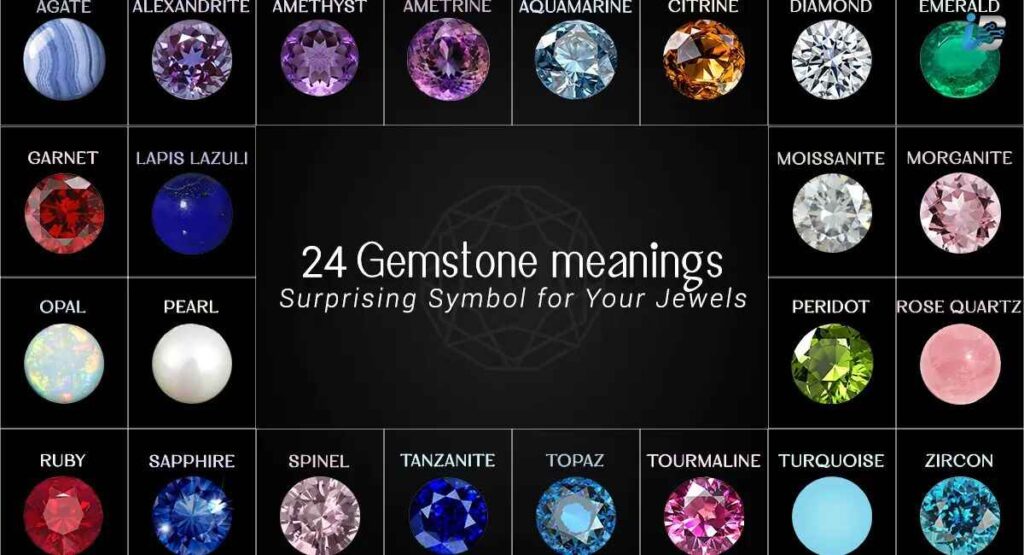
Color is the fastest way to predict a stone’s traditional meaning, and it’s the first filter most litho therapy and crystal healing traditions use when assigning a spiritual meaning to a new stone.
Red and orange stones like ruby, garnet, and carnelian are tied to vitality, courage, and physical drive — the stones people reach for before a big presentation or a hard workout. Blue and green stones such as sapphire, aquamarine, emerald, and jade are linked to calm, clarity, and emotional balance, associated with communication and compassion far more often than ambition.
Purple and violet stones like amethyst and charoite lean toward intuition, spiritual insight, and higher awareness, while black and brown stones such as onyx, obsidian, and smoky quartz are almost universally tied to protection and grounding against negative energy.
Gemstone Meanings by Chakra Alignment
In Vedic and yogic traditions, gemstones are matched to the body’s seven energy centers, or chakras, based on color correspondence and vibrational frequency.
The root chakra (base of the spine) pairs with red or black stones like garnet, red jasper, and black tourmaline, associated with grounding and physical stability. The sacral chakra favors orange stones like carnelian for creativity, and the solar plexus chakra favors yellow stones like citrine for confidence and personal power.
The heart chakra pairs with green and pink stones like rose quartz and emerald, tied to compassion and emotional healing. The throat chakra favors blue stones such as lapis lazuli and sodalite for honest communication, while the crown chakra pairs with violet or clear stones like amethyst and clear quartz for spiritual intuition and manifestation.
Zodiac Signs, Birth Months, and Their Traditional Birthstones
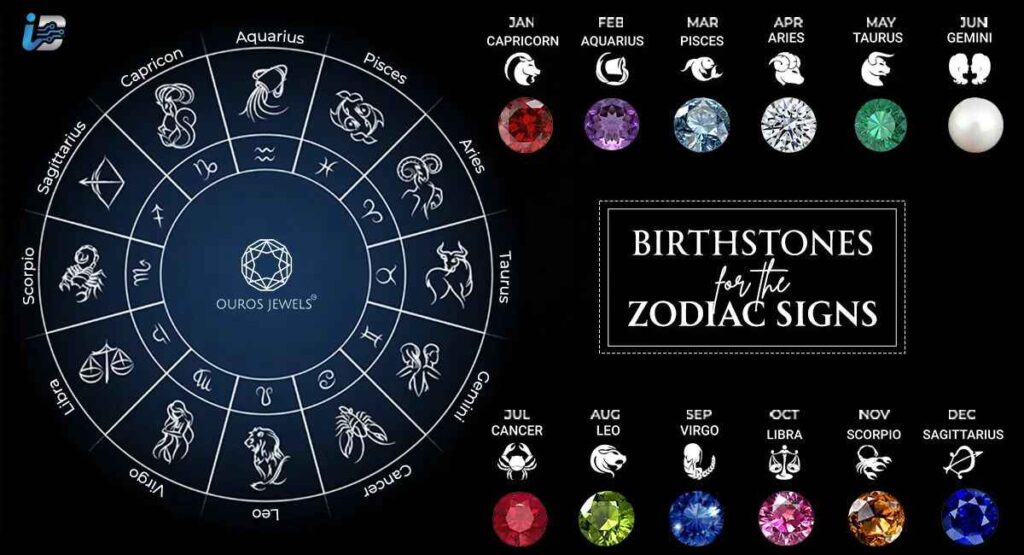
Every zodiac sign has at least one traditional astrology-linked stone, a practice that blends ancient Vedic gemology with Western birthstone traditions formalized by jewelers in the early 1900s.
Aries wears bloodstone or diamond for courage, Taurus favors emerald for abundance, and Scorpio is tied to topaz and citrine for transformation. These pairings mix Western tropical astrology with older Vedic systems, so you’ll sometimes see two or three stones listed for the same sign depending on the source.
| Birth Month | Traditional Birthstone | Core Meaning |
| January | Garnet | Protection, commitment |
| February | Amethyst | Clarity, peace |
| March | Aquamarine | Courage, calm |
| April | Diamond | Purity, strength |
| May | Emerald | Love, abundance |
| June | Pearl / Moonstone | Purity, intuition |
| July | Ruby | Passion, vitality |
| August | Peridot | Positivity, protection |
| September | Sapphire | Wisdom, loyalty |
| October | Opal / Tourmaline | Creativity, hope |
| November | Topaz / Citrine | Confidence, joy |
| December | Turquoise / Tanzanite | Protection, transformation |
Meanings above reflect traditional and cultural belief, not scientifically verified effects.
Top Gemstones and Their Core Meanings and Powers
Here’s an expanded fast-reference table covering the most searched gemstones, since most competing guides bury this in long paragraphs instead of a scannable format.
| Gemstone | Color | Core Meaning | Traditional Power |
| Amethyst | Purple | Clarity, sobriety | Calms the mind, aids meditation |
| Rose Quartz | Pink | Unconditional love | Opens the heart chakra |
| Citrine | Yellow | Abundance, joy | Attracts prosperity and confidence |
| Garnet | Deep red | Passion, commitment | Boosts vitality and courage |
| Ruby | Red | Passion, power | Ignites confidence and energy |
| Sapphire | Blue | Wisdom, loyalty | Sharpens focus and inner truth |
| Emerald | Green | Love, rebirth | Encourages compassion and abundance |
| Diamond | Clear | Purity, strength | Symbolizes eternal commitment |
| Jade | Green | Harmony, luck | Balances emotions and prosperity |
| Opal | Multicolor | Creativity, hope | Enhances imagination and emotion |
| Pearl | White | Purity, femininity | Encourages calm and integrity |
| Black Tourmaline | Black | Protection | Shields against negative energy |
| Turquoise | Blue-green | Protection in travel | Guards against loss and accidents |
| Lapis Lazuli | Deep blue | Wisdom, truth | Sharpens intellect and honesty |
| Moonstone | Milky white | Feminine intuition | Balances emotions and cycles |
| Tiger’s Eye | Golden brown | Courage, focus | Grounds energy and builds willpower |
| Aquamarine | Pale blue | Calm, courage | Historically protected sailors at sea |
| Labradorite | Blue-gray | Transformation | Awakens intuition and magic |
“Traditional Power” reflects folklore and spiritual tradition, not proven medical or physical effects.
Amethyst: The Stone of Sobriety and Clarity
The ancient Greeks named amethyst from amethystos, meaning “not intoxicated,” believing it prevented drunkenness. Today it’s more commonly worn as a meditation aid and stress reliever than for its original party trick, making it one of the most popular healing crystals in modern wellness routines.
Turquoise: The Traveler’s Protector
Turquoise has one of the oldest continuous uses in jewelry, worn by Egyptian pharaohs and Native American cultures alike as a guard against accidents and misfortune during travel. It remains a favorite talisman stone for frequent flyers today.
Ruby: The Stone of Passion and Power
Ruby has been prized since antiquity as a symbol of vitality, love, and protection in battle, and folklore ties it to the “king of gems” nickname found in some ancient Sanskrit writings. Modern wearers favor it for confidence, romance, and reigniting motivation during low-energy periods.
Jade: The Stone of Harmony and Luck
In Chinese culture, jade represents harmony, virtue, and good fortune, and has been carved into amulets and ceremonial objects for over 5,000 years. It’s still one of the most gifted stones for prosperity and long-term relationship harmony.
The History and Mysticism Behind Gemstone Beliefs
Ancient Egypt buried the dead with lapis lazuli and carnelian to protect the soul’s journey into the afterlife. Ancient Greece carved gemstone amulets for both decoration and defense against illness, while Vedic astrology in India built an entire system, Navaratna, around nine gems representing nine celestial bodies.
These traditions rarely overlapped directly, yet they landed on remarkably similar symbolism — which says less about actual magic and more about how consistently humans respond to color, rarity, and light across different eras of mysticism.
Science vs. Belief: What Research Actually Says About Crystal Healing
Here’s the part most gemstone articles skip entirely. There is no peer-reviewed evidence that gemstones emit measurable healing energy or cure physical illness, and mainstream gemology treats crystal healing as a belief system rather than a medical practice.
What is well documented is the placebo effect and the psychological power of ritual — wearing a stone tied to courage can genuinely shift mindset and behavior, similar to a lucky charm before a big event. That makes gemstone meanings a holistic wellness tool rather than a substitute for actual healthcare.
How to Choose the Right Gemstone for Your Intention
Start with the outcome you want, not the stone’s popularity. If you need grounding during a stressful season, root-chakra stones like black tourmaline or red jasper make more sense than a crown-chakra stone like amethyst.
If you’re shopping for jewelry rather than loose stones, factor in durability too — softer stones like opal and moonstone scratch easily and suit pendants or earrings better than everyday rings exposed to daily wear.
Caring for, Cleansing, and Verifying a Genuine Gemstone
Most crystal traditions recommend cleansing a new stone before wearing it, using methods like moonlight exposure, running water, or smudging with dried herbs. Avoid water on porous stones like turquoise and opal, since it can dull their surface over time.
Real gemstones often feel cool to the touch initially and warm slowly, while glass imitations warm almost instantly. Genuine stones also show natural inclusions or slight color variation under magnification — buy from sellers who provide a gemological certificate for anything marketed as rare or high-value.
FAQs
What is the most powerful gemstone?
There’s no single “most powerful” stone — it depends on intention. Black tourmaline is favored for protection, while citrine is favored for abundance.
Can gemstones actually heal you?
There’s no scientific proof gemstones cure illness, though many people report psychological benefits similar to a placebo effect.
How often should I cleanse my crystals?
Most practitioners suggest cleansing monthly, or after any emotionally intense event, to keep the stone’s symbolic energy fresh.
What gemstone symbolizes new beginnings?
Moonstone and clear quartz are both commonly tied to new beginnings and fresh emotional cycles.
Are birthstones based on astrology or the calendar month?
Both systems exist. Zodiac birthstones follow astrological signs, while monthly birthstones follow a separate, modern calendar-based tradition.
What’s the difference between a gemstone and a crystal?
“Gemstone” typically refers to a cut and polished mineral used in jewelry, while “crystal” can refer to any naturally formed mineral structure, polished or raw.
Is this article medical advice?
No. Gemstone meanings here are presented as folklore, spiritual tradition, and cultural symbolism, not medical guidance. Speak with a licensed healthcare provider for any health concern.
Conclusion
Gemstone meanings and powers blend color psychology, centuries of cultural tradition, and a healthy dose of ritual and belief. Understanding the difference between folklore and fact doesn’t make these stones less meaningful — it just means you can wear one for exactly the right reason, whether that’s grounding, protection, prosperity, or simply because it’s beautiful.

Welcome to Infoz Style I am Karl Braun ,an Ai – powered SEO , and Content Writer With 4 Years of experience. I help Websites Rank higher , grow traffic , and look amazing . My goal is to make SEO and Web design simple and effective for everyone.
Let`s achieve more together !